

The first venue tour can make everything feel wonderfully real: the guest list suddenly has a shape, your color palette starts appearing everywhere, and you realize you need a photographer, caterer, florist, music, rentals, and more. The good news? When you know how to find local wedding vendors, the search becomes less about scrolling endlessly and more about assembling a team that understands your vision, your region, and your priorities.
Northern California offers an incredible range of wedding talent, from Sacramento garden venues and Lodi wine-country caterers to Tahoe floral designers and Reno entertainment pros. Your best fit is not necessarily the first name you see or the vendor with the most social followers. It is the professional whose work, communication style, experience, and investment level align with the celebration you want to create.
Start with the Decisions That Shape Every Vendor Search
Before you inquire with anyone, get a few foundational details on paper. You do not need a finalized spreadsheet or a fully formed wedding design. A realistic guest-count range, target date or season, approximate budget, and preferred location will give vendors enough context to tell you whether they are a match.
Your venue is usually the first major decision because it influences nearly everything else. A Tahoe lodge may have different transportation, weather, power, and vendor-access considerations than a downtown Sacramento ballroom. A private estate may require you to bring in rentals, catering, restrooms, and coordination, while an all-inclusive venue may already provide several of those pieces.
It also helps to identify your top three priorities as a couple. Maybe exceptional food matters most, or perhaps you want documentary-style photography and a packed dance floor. If you care deeply about floral impact but are relaxed about favors and signage, that is useful information. Spend where the experience matters to you, not where a generic planning checklist says you should.
How to Find Local Wedding Vendors with Real Context
A local search is more valuable than typing a broad category into a search bar. Look for vendors who regularly work in your specific area and understand its practical details. A photographer who knows how late Tahoe light lingers, a planner familiar with Sacramento County permitting, or a caterer accustomed to serving at Lodi vineyards can bring calm, useful expertise to the day.
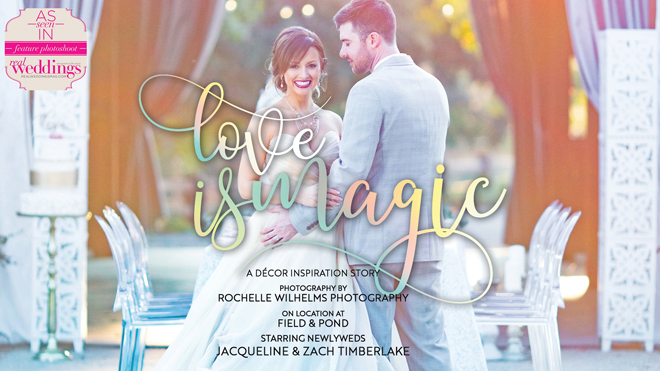
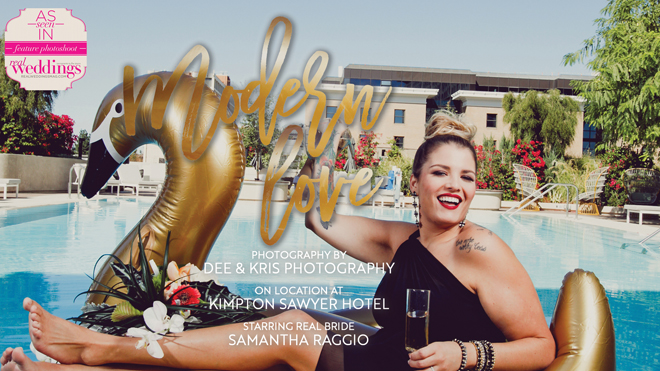
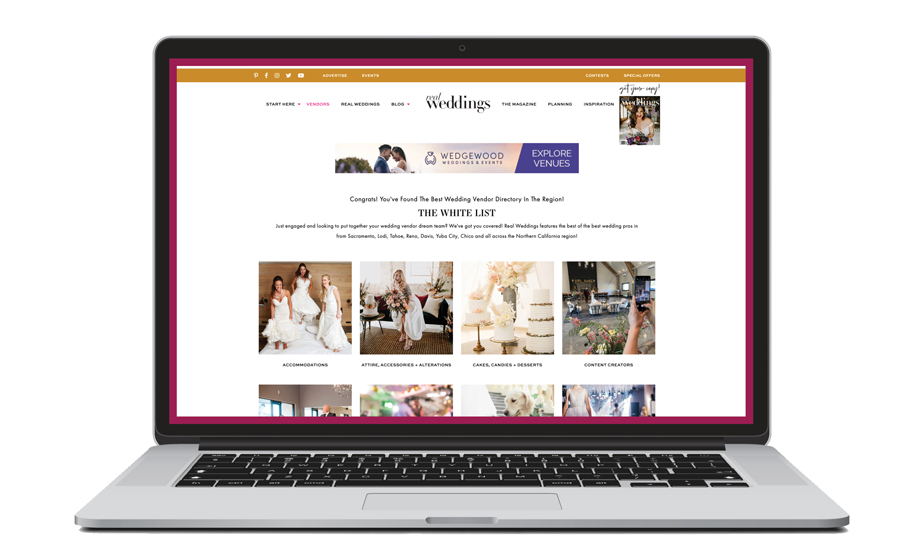
Start with curated regional resources, including Real Weddings Magazine’s Whitelist Directory, local wedding events, and real wedding features. Real weddings are especially helpful because they show professionals working together in an actual setting, not just in a styled portfolio. Notice which images, tablescapes, ceremonies, and guest experiences make you pause. Then pay attention to the vendor credits behind them.
Personal recommendations can be equally valuable, but ask the right follow-up question. Rather than simply asking whether someone “was good,” ask what it was like to work with them. Did they answer questions clearly? Did they stay on schedule? Did they help the couple solve a problem? Did their final product feel consistent with what was promised? A glowing recommendation is most useful when you understand why it was earned.
Search by style and by service area
Use descriptive terms alongside the category and location you need. For example, search for “editorial wedding photographer Sacramento,” “Tahoe wedding florist meadow-inspired,” or “Lodi wedding band.” This helps you move beyond a generic vendor list and toward professionals whose aesthetic already feels close to yours.
Still, do not rule someone out just because every portfolio image does not match your exact color palette. Great vendors can adapt. What you are looking for is a consistent point of view, polished work across different weddings, and evidence that they can execute well in a variety of spaces and lighting conditions.
Look for experience with your venue type
A vendor does not have to have worked at your exact venue to be excellent. But experience with a similar setting can be a meaningful advantage. Mountain weather, vineyard terrain, historic buildings, waterfront wind, and private-property logistics all affect setup, timing, equipment, and guest comfort.
Ask how they would approach your venue and what they would plan for. Their response should feel specific rather than overly rehearsed. A seasoned professional may mention a backup ceremony layout, travel timing, access for deliveries, sound restrictions, or how they would handle a summer heat wave. Those details are a sign that they are thinking beyond pretty pictures.
Compare More Than the Price Tag
Wedding budgets are real, and no one should pretend otherwise. But comparing proposals line by line without comparing scope can lead to surprises later. One photographer’s eight-hour package may include a second shooter and an album, while another’s lower starting price may cover only six hours and digital files. Neither approach is automatically better. They are simply different offerings.
When reviewing proposals, consider the total experience: what is included, what is optional, what may incur travel or service fees, and what happens if your timeline changes. Ask whether taxes, gratuities, setup, breakdown, delivery, rentals, or overtime are included. A clear proposal is a gift to your future planning self.
For catering, ask about staffing, bar service, rentals, dietary accommodations, and late-night options. For florals, ask what is likely to change with seasonality and whether installation, candles, and vessel rentals are included. For music, clarify ceremony audio, cocktail-hour coverage, breaks, and backup equipment. The details vary by category, but the goal is the same: understand the investment before you sign.
If a favorite vendor is outside your initial budget, be honest and respectful. They may offer a smaller collection, weekday availability, a shortened coverage window, or a thoughtful alternative that protects the part of their work you love most. Do not expect a professional to discount their expertise, but do ask whether there is a package that better fits your plans.
Let the Consultation Tell You Something
Your first conversation with a vendor is not just a chance to receive a quote. It is a preview of the working relationship. You should leave feeling heard, informed, and excited, not pressured or confused.
Come prepared with your date, venue status, guest count, budget range, and a few images that communicate your overall feeling. Tell them what you value, whether that is a relaxed timeline, cultural traditions, elevated tablescapes, candid family photos, or a truly memorable meal. The best professionals will ask thoughtful questions before prescribing solutions.
Pay attention to communication style. Some couples want frequent check-ins and lots of guidance; others prefer a concise, organized process. A planner who thrives on detailed collaboration may be perfect for one couple and too hands-on for another. Likewise, a quiet photographer with a documentary approach may be exactly right for a couple who does not want constant posing. Chemistry matters because these are the people who will be close to you on a meaningful, fast-moving day.
Check the Practical Details Before Booking
Once you have narrowed your choices, verify the essentials. Confirm availability in writing, review the contract carefully, understand the payment schedule, and ask about cancellation, postponement, insurance, and backup plans. For a photographer or videographer, discuss turnaround times and image delivery. For a beauty team, ask about trials, touch-up options, travel, and the number of artists needed for your group.
You should also ask who will actually be present on the wedding day. With larger companies, the person who responds to your inquiry may not be your assigned lead. That is not inherently a concern, but you deserve clarity about the team, their experience, and how handoffs are managed.
A trusted vendor will welcome reasonable questions. If an answer is vague, a contract feels rushed, or the communication consistently leaves you uneasy, pause before sending a deposit. Your wedding team should bring confidence to the planning process, not create another problem to manage.
Build a Team That Works Well Together
Vendor fit is not only about each individual professional. It is also about how the team functions together. Your planner or coordinator can help create a realistic timeline. Your photographer needs enough time for portraits. Your caterer needs a clear dinner service plan. Your band or DJ needs cues for entrances, toasts, and special dances.
Share your confirmed vendor list as you book. Experienced wedding professionals often know one another, and a familiar working relationship can make the day feel especially smooth. That said, you do not need every vendor to have worked together before. Clear communication, a detailed timeline, and mutual professionalism matter far more.
Give yourself permission to choose the team that feels right for your wedding, not someone else’s. Your celebration might be an intimate dinner in Davis, a lively Sacramento party, a wine-country weekend, or a mountain gathering surrounded by pines. The right local professionals will help make it feel like yours from the first guest arrival to the final song.
When a vendor makes you feel understood, offers practical answers, and is genuinely excited about your plans, take notice. That is often the beginning of the dream team that lets you be fully present for the celebration you have been waiting for.